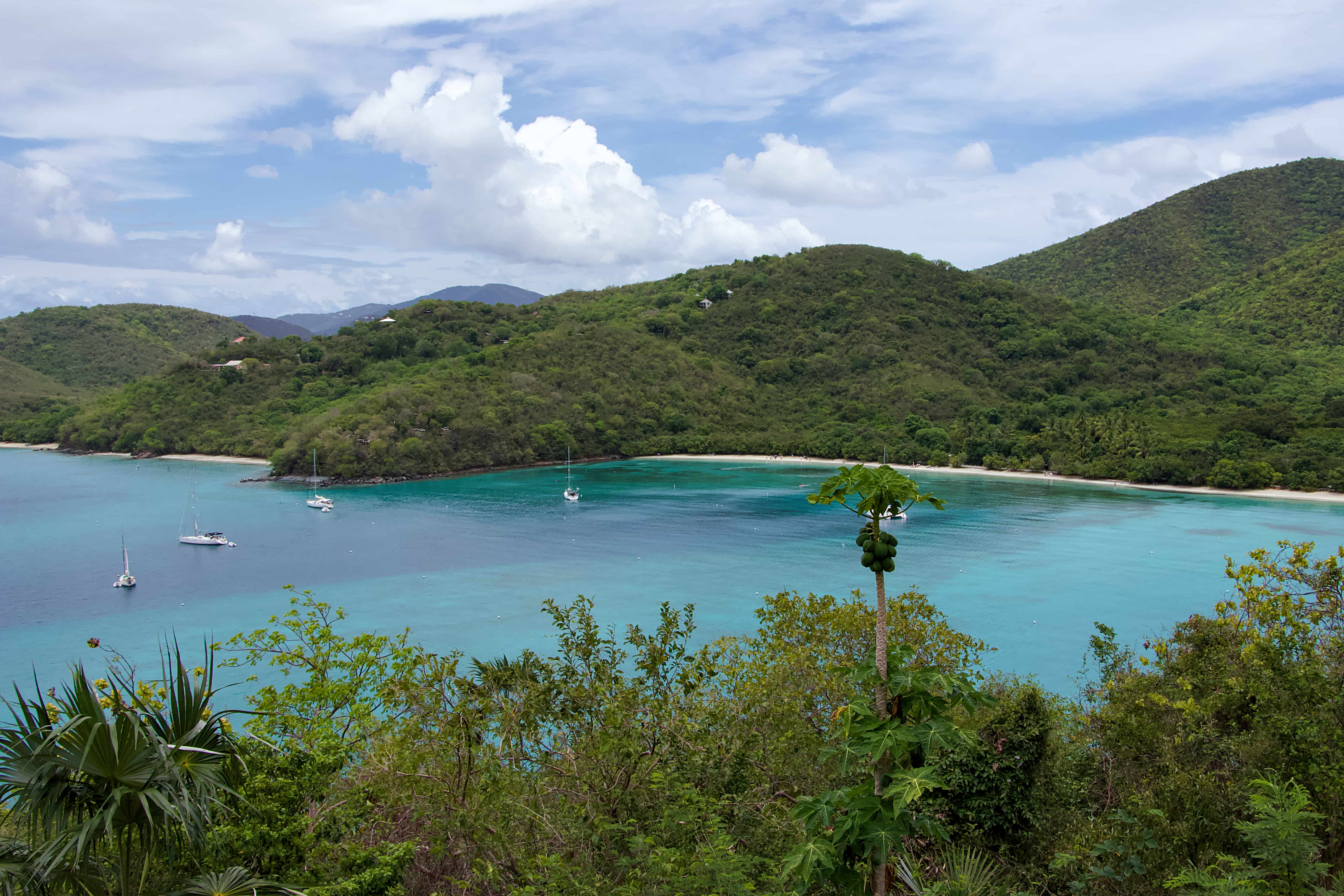
The Virgin Islands are a single archipelago divided by two flags. Virgin Islands National Park covers roughly three-fifths of St. John and holds UNESCO World Biosphere Reserve status — and 40% of the park is underwater. On the British side, Anegada's Horseshoe Reef is among the largest barrier reef systems in the Caribbean, backed by 580 hectares of mangrove habitat.
Summer is when the biological engine runs hardest. Three sea turtle species nest on St. John's beaches — hawksbills, greens, and leatherbacks — peaking August through November. The 2025 season set a record: 44 nests documented. At Anegada, flat coral atoll and ecological outlier of the chain, a reintroduced flamingo flock now 250 birds strong lives among salt ponds designated as bird sanctuary, alongside nesting herons, warblers, and ospreys. Below the surface, roughly 400 fish species move through the reefs, including eagle rays, nurse sharks, seahorses, and the Anegada spiny lobster.
Summer is also hurricane season. The reefs, mangroves, and seagrass beds here are shaped by the same Atlantic storm cycle they must survive every year.
Documentation window: July–November. Pre-dawn beach monitoring for turtles. Flamingo Pond at dawn or dusk. Reef visibility peaks before storm surge.