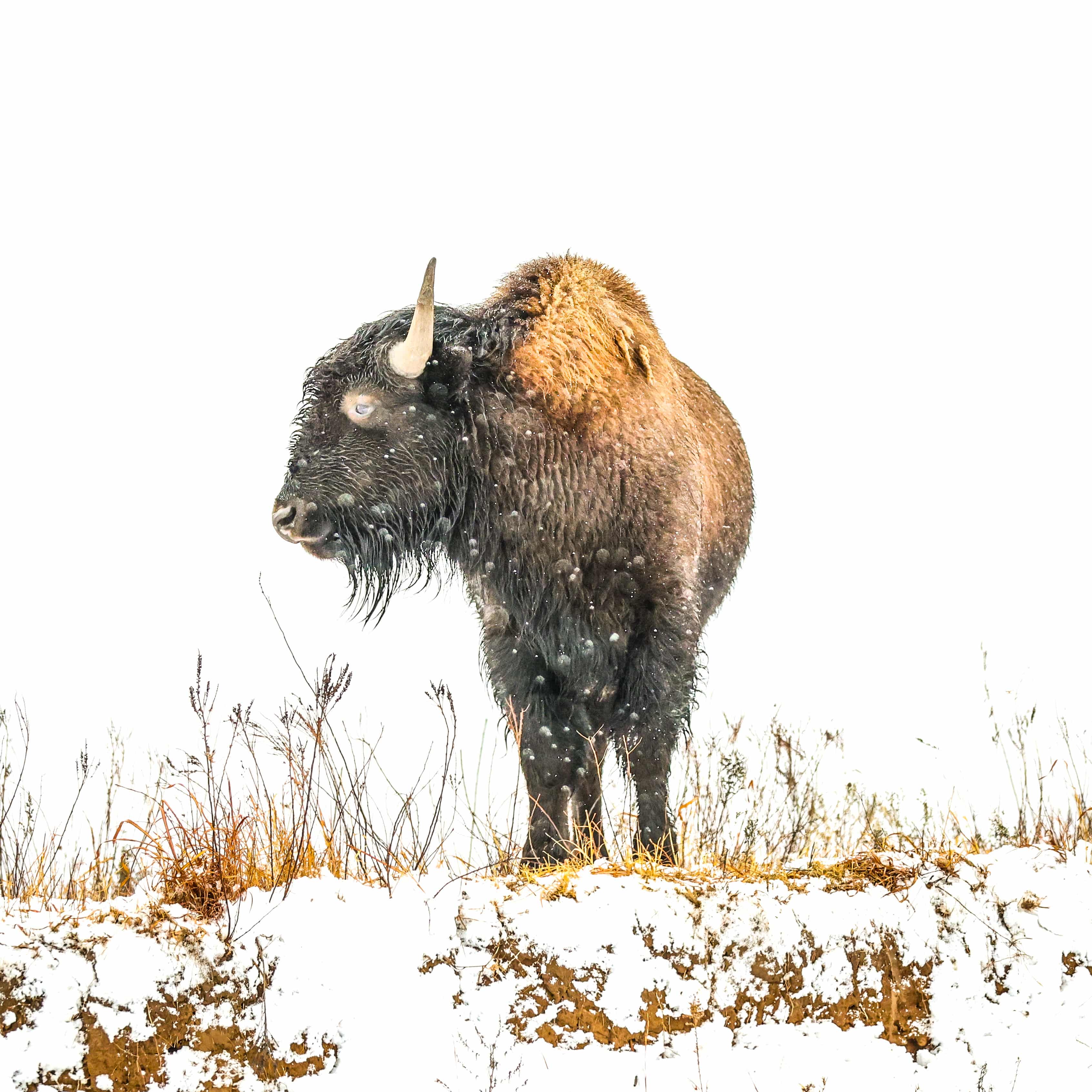
The story of Maxwell begins in 1859, when Henry Gault Maxwell drove a small herd of bison into the rolling Smoky Hills of central Kansas and established a homestead. He dreamed of preserving a piece of the prairie so future generations could experience the region as it existed before settlement. That dream held. In 1944 his son deeded 2,560 acres to the state, and by 1951 a founding herd of seven cows and three bulls — sourced from the Wichita Mountains Wildlife Refuge in Oklahoma — was reintroduced to the native grass.
Today Maxwell manages roughly 200 bison and 60 elk across 2,800 acres of native prairie — the only public place in Kansas where both species can be seen together. The land is not a zoo or a managed park in the conventional sense. The refuge sits at the southern edge of the Smoky Hills in the headwaters of Gypsum Creek, with rolling terrain, wooded creek bottoms, and open grassland that functions as a genuine prairie remnant. The bison move freely across it.
What Maxwell represents ecologically is as important as what it looks like. The American bison once shaped the entire Great Plains through grazing, wallowing, and migration — and was reduced from tens of millions to fewer than a thousand animals by the late 1880s. The herd at Maxwell is a direct thread back to that ecosystem. Spring brings calving. Fall brings the rut. The prairie responds to both.